Understanding the Early Warning Signs for Timely Diagnosis and Better Recovery
Schizophrenia is one of the most misunderstood mental health conditions. While many people associate it only with hallucinations or unusual behaviour, the disorder often begins much more subtly. The earliest symptoms can develop gradually over weeks, months, or even years, making them easy to overlook or mistake for stress, anxiety, depression, or personality changes.
Recognizing these early warning signs is extremely important because early diagnosis and timely treatment can significantly improve long-term outcomes. The sooner a person receives appropriate psychiatric care, the better the chances of managing symptoms, preventing complications, and improving quality of life.
At Hope and Care Clinic, Barasat, psychiatrist Dr. Sanjoy Roy specialises in the early identification, diagnosis, and treatment of schizophrenia and other mental health disorders. Through comprehensive evaluation and personalized treatment plans, patients receive compassionate care designed to help them regain stability and confidence.
This guide explains the early symptoms of schizophrenia, possible causes, risk factors, diagnosis, treatment options, and when it is time to seek professional help.
What Is Schizophrenia?
Schizophrenia is a chronic psychiatric disorder that affects the way a person thinks, feels, behaves, and perceives reality. It is a medical condition involving changes in brain functioning—not a sign of personal weakness or poor character.
Although schizophrenia usually develops between the late teenage years and the early 30s, its earliest warning signs often appear much earlier.
These early changes are known as the prodromal phase, during which symptoms may be mild but gradually become more noticeable.
Why Recognizing Early Symptoms Matters
Early intervention offers several important benefits, including:
- Better response to treatment
- Reduced severity of future symptoms
- Lower risk of hospitalization
- Improved academic and work performance
- Better relationships and social functioning
- Enhanced long-term quality of life
Many people delay seeking treatment because the early symptoms are often misunderstood. Recognising them can make a significant difference.
Early Symptoms of Schizophrenia
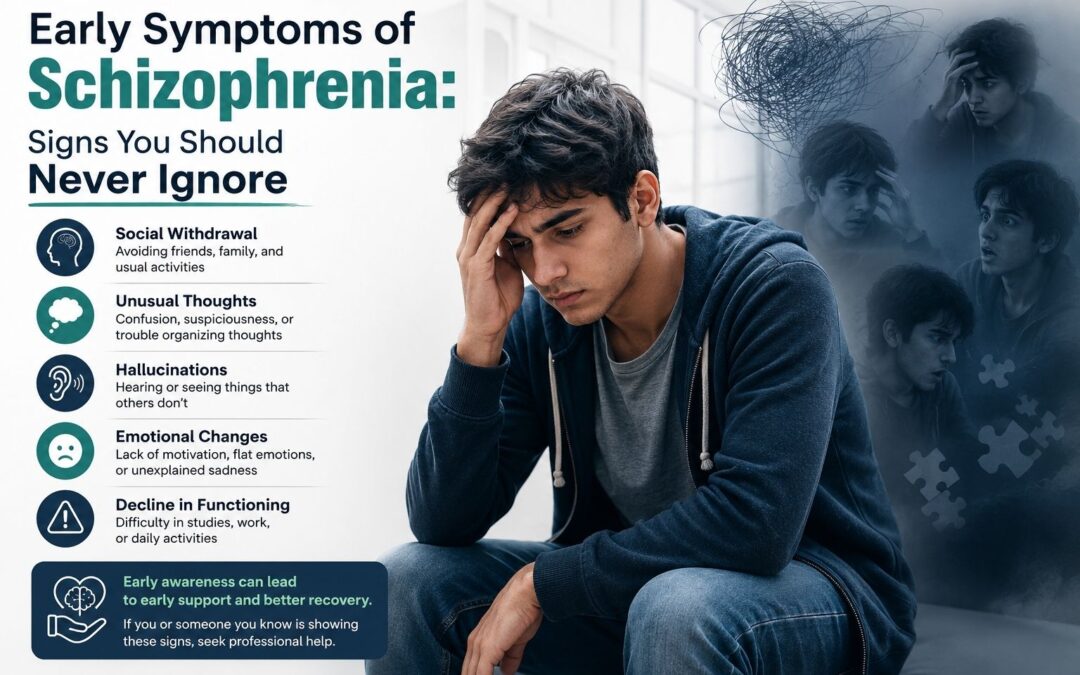
The early symptoms may vary from person to person, but several warning signs are commonly observed.
1. Social Withdrawal
One of the earliest and most noticeable signs is a gradual withdrawal from family, friends, and social activities.
A person may:
- Prefer being alone
- Stop meeting friends
- Avoid conversations
- Lose interest in hobbies
Family members often notice these changes before the individual does.
2. Decline in Academic or Work Performance
People who were previously performing well may suddenly begin experiencing difficulties.
Warning signs include:
- Poor concentration
- Missed deadlines
- Declining grades
- Reduced productivity
- Difficulty completing tasks
These changes are often mistaken for stress or burnout.
3. Difficulty Concentrating
Many individuals experience increasing problems with attention and focus.
They may struggle to:
- Read books
- Follow conversations
- Watch movies
- Complete routine work
Simple tasks may suddenly feel mentally exhausting.
4. Unusual Suspicion or Paranoia
Another early symptom is developing excessive suspicion toward others.
For example, a person may believe:
- Others are talking about them
- Friends are becoming dishonest
- People are watching or judging them
Although these thoughts may initially seem mild, they can gradually become more intense.
5. Emotional Changes
Schizophrenia often affects emotional expression.
Some people become:
- Emotionally distant
- Less expressive
- Irritable
- Anxious
- Depressed
Others may appear emotionally “flat,” showing little reaction to positive or negative events.
6. Changes in Sleep Patterns
Sleep disturbances are common during the early stages.
These may include:
- Difficulty falling asleep
- Sleeping during the day
- Staying awake all night
- Frequent waking
Poor sleep can worsen concentration and emotional well-being.
7. Loss of Motivation
Individuals may gradually lose interest in activities they once enjoyed.
Examples include:
- Neglecting personal goals
- Reduced participation in family life
- Lack of enthusiasm for work
- Difficulty starting daily tasks
This symptom is often mistaken for laziness or depression.
8. Neglecting Personal Hygiene
Some people begin paying less attention to personal care.
Family members may notice:
- Irregular bathing
- Poor grooming
- Untidy clothing
- Reduced self-care
This change usually develops gradually rather than suddenly.
9. Unusual Thoughts or Beliefs
Early schizophrenia may involve mild changes in thinking.
A person might:
- Interpret ordinary events as personally meaningful
- Develop odd beliefs
- Describe unusual experiences
- Become increasingly preoccupied with certain ideas
These symptoms deserve professional evaluation, especially if they persist or worsen.
10. Hearing or Seeing Things Others Do Not
Although hallucinations are usually associated with later stages, subtle perceptual changes may appear early.
Examples include:
- Hearing faint voices
- Feeling someone is present when no one is there
- Seeing shadows or movements others cannot see
Any persistent hallucination requires immediate psychiatric assessment.
What Causes Schizophrenia?
There is no single cause of schizophrenia. Experts believe it develops through a combination of biological and environmental factors.
Genetics
A family history of schizophrenia may increase the likelihood of developing the condition, although many people with schizophrenia have no affected relatives.
Brain Chemistry
Differences in neurotransmitters such as dopamine and glutamate are thought to contribute to symptoms.
Brain Development
Research suggests that subtle differences in brain development and neural connections may play a role.
Environmental Factors
Certain life experiences may increase risk, including:
- Childhood trauma
- Severe stress
- Substance misuse
- Pregnancy or birth complications
- Viral infections affecting brain development
These factors do not directly cause schizophrenia but may contribute in vulnerable individuals.
Who Is at Higher Risk?
Risk may be higher among individuals who:
- Have a family history of schizophrenia
- Experienced significant childhood trauma
- Misuse recreational drugs, particularly during adolescence
- Live with prolonged stress
- Have certain neurodevelopmental vulnerabilities
Having one or more risk factors does not mean someone will definitely develop schizophrenia.
How Is Schizophrenia Diagnosed?
There is no single laboratory test for schizophrenia.
Diagnosis involves a detailed psychiatric evaluation that includes:
- Medical history
- Mental status examination
- Family history
- Symptom assessment
- Physical examination (to rule out medical causes)
- Psychological evaluation
A psychiatrist also considers how long symptoms have been present and how they affect daily functioning.
Treatment Options
Schizophrenia is a long-term condition, but modern treatment can help individuals lead productive and fulfilling lives.
Medication
Antipsychotic medications help reduce symptoms such as hallucinations, delusions, and disorganised thinking.
Treatment is individualized based on the person’s symptoms, overall health, and response to medication.
Psychotherapy
Therapy complements medication by helping individuals:
- Understand their condition
- Develop coping skills
- Improve daily functioning
- Manage stress
- Build confidence
Cognitive Behavioral Therapy (CBT) is commonly recommended as part of comprehensive care.
Family Education
Schizophrenia affects the entire family.
Educating family members helps them:
- Understand symptoms
- Support recovery
- Improve communication
- Recognize early warning signs of relapse
Supportive families often contribute significantly to positive outcomes.
Lifestyle Support
Healthy lifestyle habits can improve overall well-being.
Helpful practices include:
- Regular exercise
- Balanced nutrition
- Good sleep hygiene
- Stress management
- Avoiding alcohol and recreational drugs
These measures support recovery but should not replace medical treatment.
When Should You Consult a Psychiatrist?
Seek professional help if you or a loved one experiences:
- Persistent social withdrawal
- Declining work or academic performance
- Hallucinations
- Unusual beliefs
- Severe emotional changes
- Difficulty distinguishing reality from imagination
- Significant changes in behavior or thinking
Early evaluation does not necessarily mean schizophrenia is present, but it allows appropriate diagnosis and treatment if needed.
Compassionate Schizophrenia Care at Hope and Care Clinic, Barasat
At Hope and Care Clinic, Barasat, psychiatrist Dr. Sanjoy Roy provides comprehensive assessment and treatment for schizophrenia and other psychiatric conditions.
The clinic offers:
- Early psychiatric evaluation
- Diagnosis of schizophrenia and related disorders
- Medication management
- Psychological counseling
- Family education and support
- Long-term follow-up care
Every treatment plan is tailored to the individual’s needs, helping patients achieve better symptom control and improved quality of life.
Final Thoughts
Schizophrenia often begins with subtle changes that are easy to overlook. Social withdrawal, reduced concentration, emotional changes, suspicious thinking, declining performance, and loss of motivation may all be early warning signs.
Recognizing these symptoms early and consulting a qualified psychiatrist can make a meaningful difference. With modern treatments, psychological support, and family involvement, many people living with schizophrenia can manage their symptoms effectively and lead productive, fulfilling lives.
If you or someone you care about is experiencing persistent changes in thinking, behaviour, or emotions, don’t ignore the signs. Early intervention offers the best opportunity for recovery.
At Hope and Care Clinic, Barasat, Dr. Sanjoy Roy is committed to providing compassionate, confidential, and evidence-based psychiatric care to help individuals and families navigate schizophrenia with confidence and hope.